The single most common Alhambra mistake has nothing to do with buying a ticket. It's misunderstanding what the ticket says. Every Alhambra ticket includes a half-hour window printed for entry into the Nasrid Palaces, and that window is the whole game. Get it wrong and a member of staff will turn you away at the door, ticket or no ticket.
What the timed slot actually controls
Your general Alhambra ticket admits you to the site for the day, but the Nasrid Palaces — the plasterwork rooms, the Patio de los Leones, the Comares tower — sit behind their own checkpoint with a separate, staffed entrance. The time printed on your ticket is not a suggestion or an estimate of how busy it'll be. It is the only window in which that gate will let you through. Staff scan tickets and check the printed time against the current slot; arrive before it and you wait, arrive after it and in most cases you're refused entry outright, with no ticket desk on site able to fix it for you.
This is different from how most people expect timed entry to work elsewhere, where a slot is really just a suggested arrival and a bit of flex either way is tolerated. At the Alhambra the flexibility is minimal. Treat the printed time as a hard appointment, not a target.
⚠️ The mistake people actually make is spending too long at the Alcazaba or wandering the gardens and losing track of the clock. The site is large, phone signal in parts of it is patchy, and the walk to the Nasrid Palaces entrance from other areas of the Alhambra takes longer than it looks on a map. Build in the walking time deliberately.
Booking a slot, and why the good ones vanish first
Slots are released through the official sales channel and, in periods of high demand, through resellers and tour operators who hold blocks of tickets. Whichever route you use, the mechanism is the same: you choose a date, and the system assigns or lets you pick a specific half-hour window for the palaces. The earliest and latest slots of the day tend to go first, partly because visitors assume — reasonably — that the early ones mean smaller crowds and softer light for photos, and the late ones mean a cooler walk. The middle of the day is usually the last availability left, which is worth knowing if you're booking close to your visit date and the calendar looks thin.
Because release dates and booking windows change from season to season, and because this site does not deal in prices or set times, the only reliable place to check current availability and the booking calendar itself is the official ticketing platform. Go there directly rather than trusting a third-party site's claim about how far in advance you need to book — that changes constantly depending on season and even day of the week.
⭐ If your travel dates are fixed and you have any doubt about availability, book the moment tickets are released rather than waiting to plan the rest of the day around it. The rest of a Granada itinerary is far easier to rearrange than a Nasrid Palaces slot.
What to do if you're locked out
People miss their slot for ordinary reasons — a late taxi, a queue at security, a wrong turn in the Generalife gardens that eats twenty minutes. The site's position is that missing your window means missing the palaces on that ticket; there is no guaranteed re-entry to a later slot, since each one has its own capacity. Some visitors have talked their way into a later gap when one existed, but that depends entirely on the day, the staff on duty, and how full subsequent slots are — it is not something to plan around or expect.
The practical response is to arrive at the general Alhambra site with enough of a buffer that a delay elsewhere doesn't touch your palace slot at all. That means treating the Nasrid Palaces as the anchor of the day and building everything else — the Alcazaba, the Palacio de Carlos V, the Generalife — around it rather than the reverse.
Arriving early versus arriving late
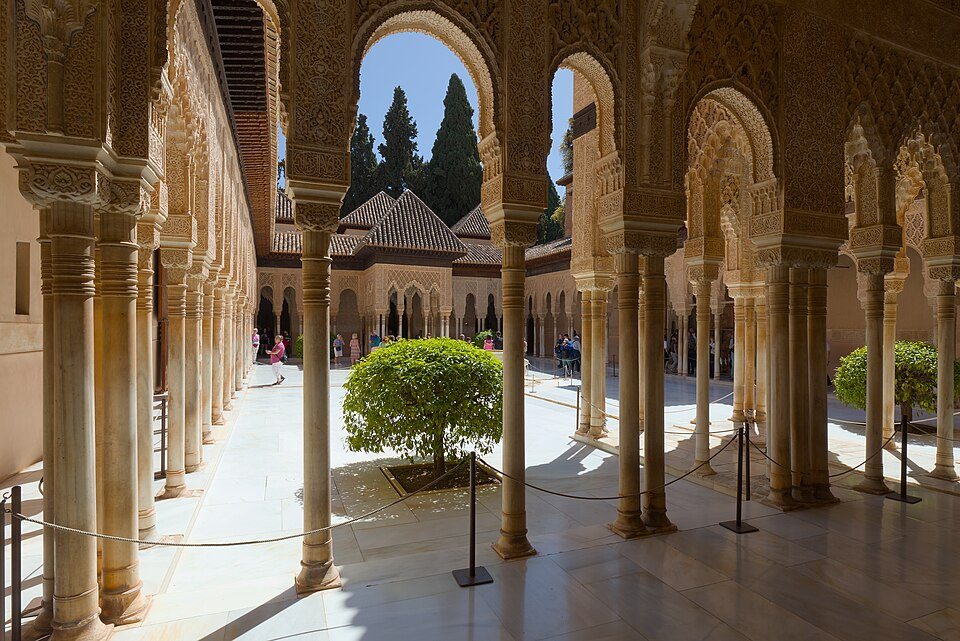
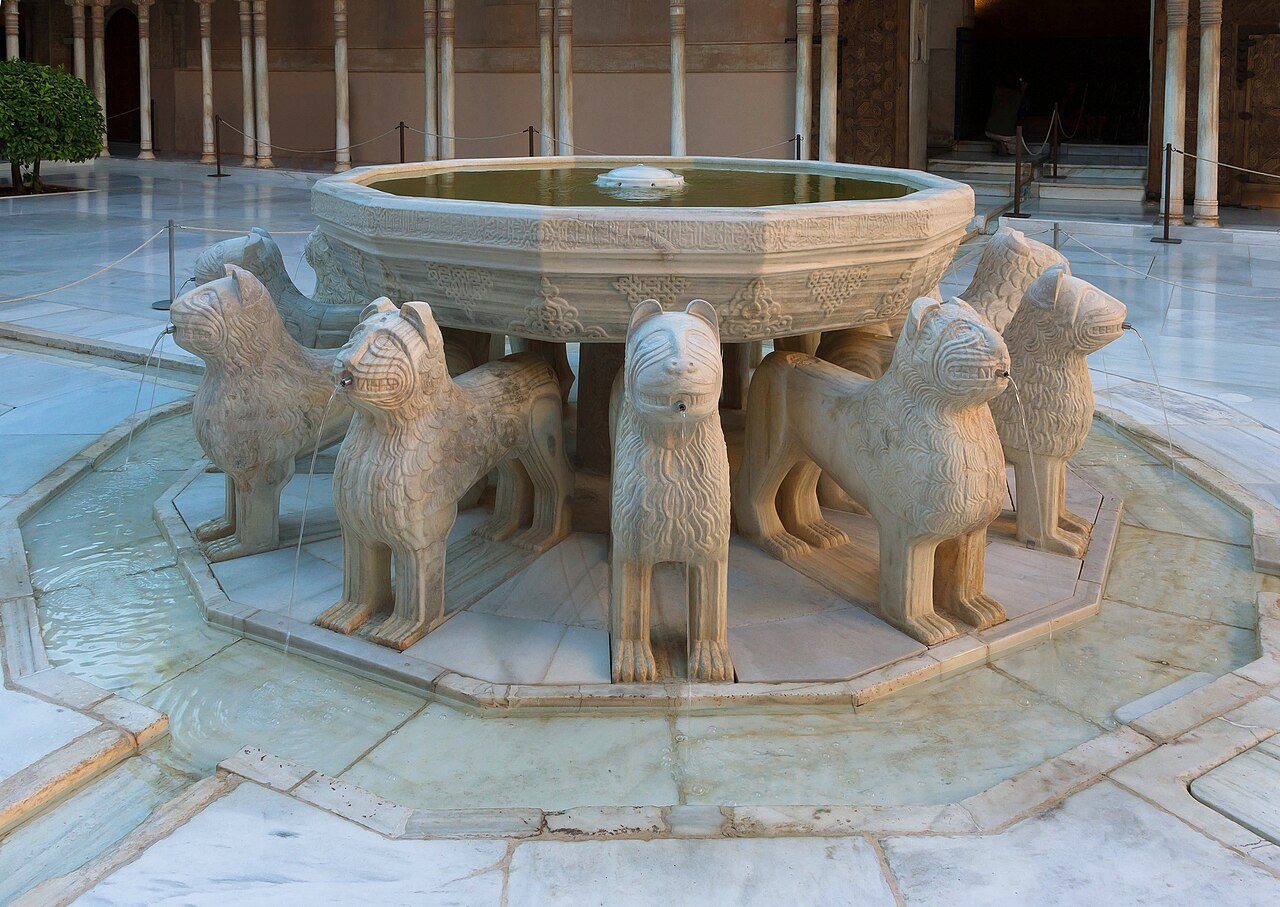
Both have a case. An early slot means the light in the Sala de los Abencerrajes and the Sala de las Dos Hermanas is softer and the courtyards are less crowded for photos, which matters if the carved muqarnas ceilings and the reflecting pool in the Patio de los Leones are the reason you came. A late slot means walking through in the day's cooler hours and, often, thinner crowds in the last visits of the opening period, since a share of visitors treat the Alhambra as a half-day morning trip and leave by early afternoon.
What doesn't change is the queuing logistics: turn up at the palace entrance close to but not much before your window opens, since standing in an unshaded line well ahead of time gains you nothing — staff will not admit you early regardless of how empty the line looks.
The route once you're inside
The palaces are designed as a sequence — Mexuar, Comares Palace, then the Palace of the Lions around the Patio de los Leones — and the flow of visitors through them is effectively one-directional. There's no doubling back once you've moved through a doorway into the next section, and no lingering for an hour in one room while a queue backs up behind you. This is worth knowing if you're traveling with someone who wants to read every information panel closely, or if you're the kind of visitor who wants to stand in the Sala de las Dos Hermanas for ten minutes watching the light change. It's possible, but the pressure of the group behind you is real, and rushing this part of the visit to "catch up" defeats the point of having booked the slot in the first place.
⭐ If detailed reading matters to you, do it beforehand rather than inside — background on the Nasrid dynasty that built the palace complex makes the rooms legible in a way that reading placards on the move never quite manages.
Combining the slot with the rest of the visit
Because the timed entry is the fixed point of the day, most people build their route as: arrive at the main Alhambra entrance with time to spare, see the Alcazaba or the Generalife first if your slot is later in the day, then move to the Nasrid Palaces gate a little ahead of the printed window, and finish with whichever sections don't have their own entry restriction. Whichever order you choose, treat the palace slot as non-negotiable and everything else as flexible around it — that single adjustment in planning prevents most of the frustration first-time visitors report. For a fuller walk-through of how to sequence a whole day at the site, see our itineraries guide, and for the wider historical context of what the surrender of the city in 1492 meant for the palace and its builders, the Nasrids page covers it directly rather than glossing over what followed.
In pictures