What it actually is
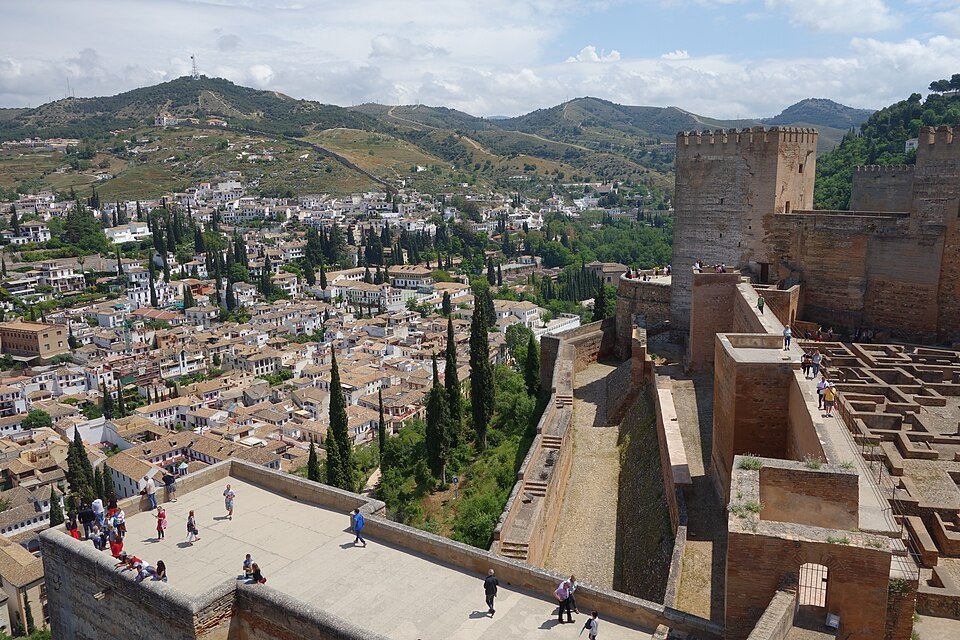
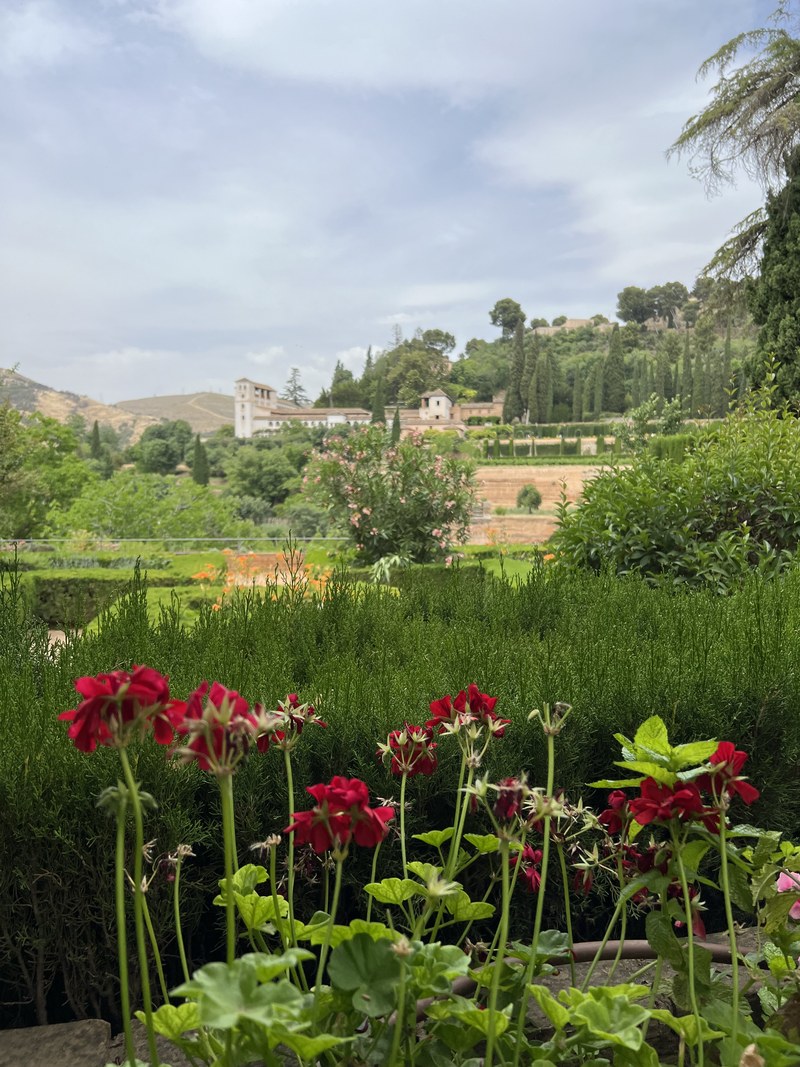
The Alhambra is not a building. It is a walled town on the Sabika hill — about seven hundred metres long — containing a fortress, a group of royal palaces, a Renaissance palace, a church, houses, cisterns and a separate summer estate on the slope above.
The name is from the Arabic al-Ḥamrāʾ, the red one, generally taken to describe the colour of its walls. What you visit is four things built centuries apart and never reconciled with each other, which is the most interesting thing about it.
Before the Nasrids
There was a fortification on this hill long before the palaces. The site is obvious: a spur with steep drops on two sides, water available from the Darro valley, and a clear view over the plain that feeds the city.
⚠️ The early phases are poorly documented and much of what is written about them is inference from later building. This site does not pretend otherwise.
The Nasrids, 1238 to 1492
The dynasty that built what you see came to power in 1238 under Muhammad I, at a moment when Muslim Iberia was collapsing. Córdoba had fallen two years earlier; Seville fell a decade later.
The Emirate of Granada survived all of it, for about two and a half centuries, largely by paying tribute to Castile and staying useful. ⭐ That is the fact that makes the Alhambra make sense: it is the architecture of a small state that lasted by being careful, built at a time when the civilisation it belonged to was contracting everywhere else.
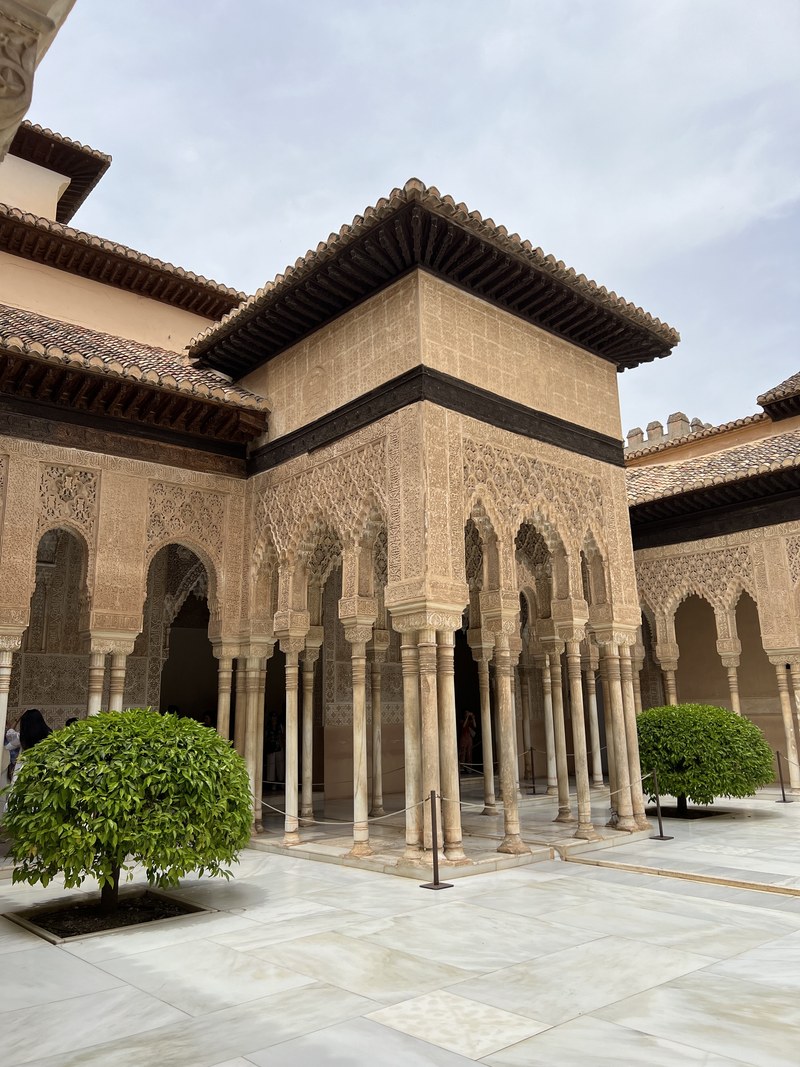
The palaces you walk through are mostly 14th-century, from the reigns of Yusuf I and Muhammad V. The Comares palace and the Palacio de los Leones both belong to that period.
How it is built, and why that matters
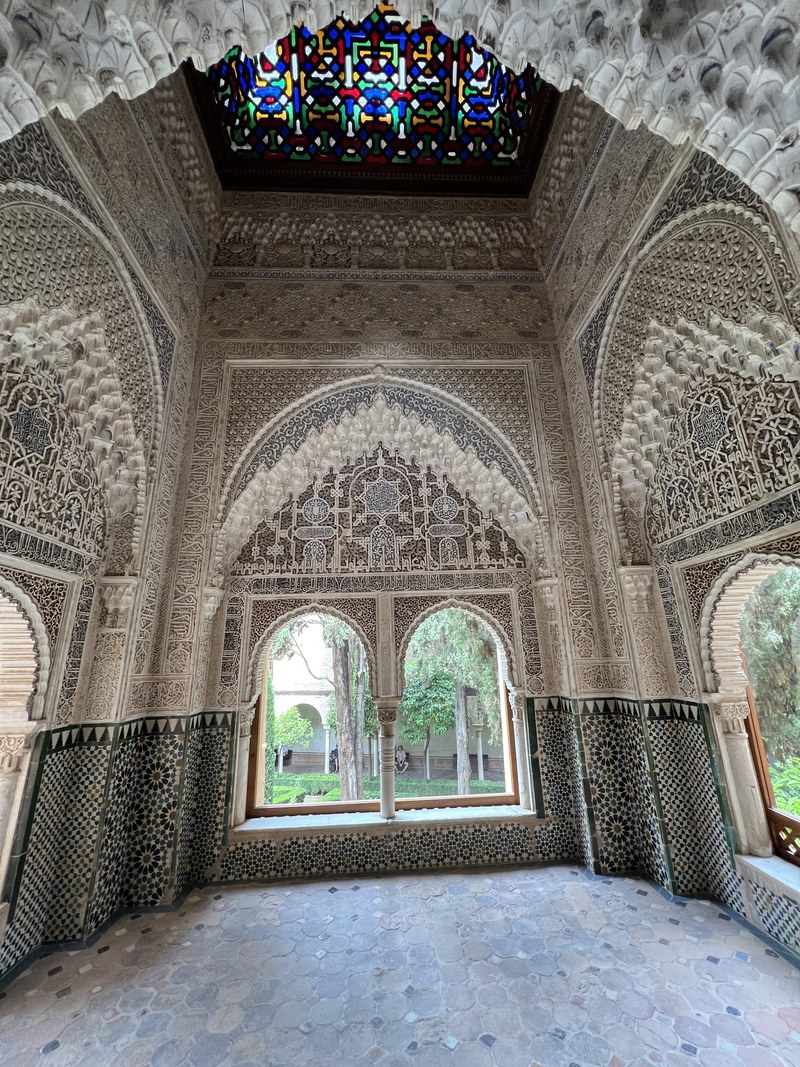
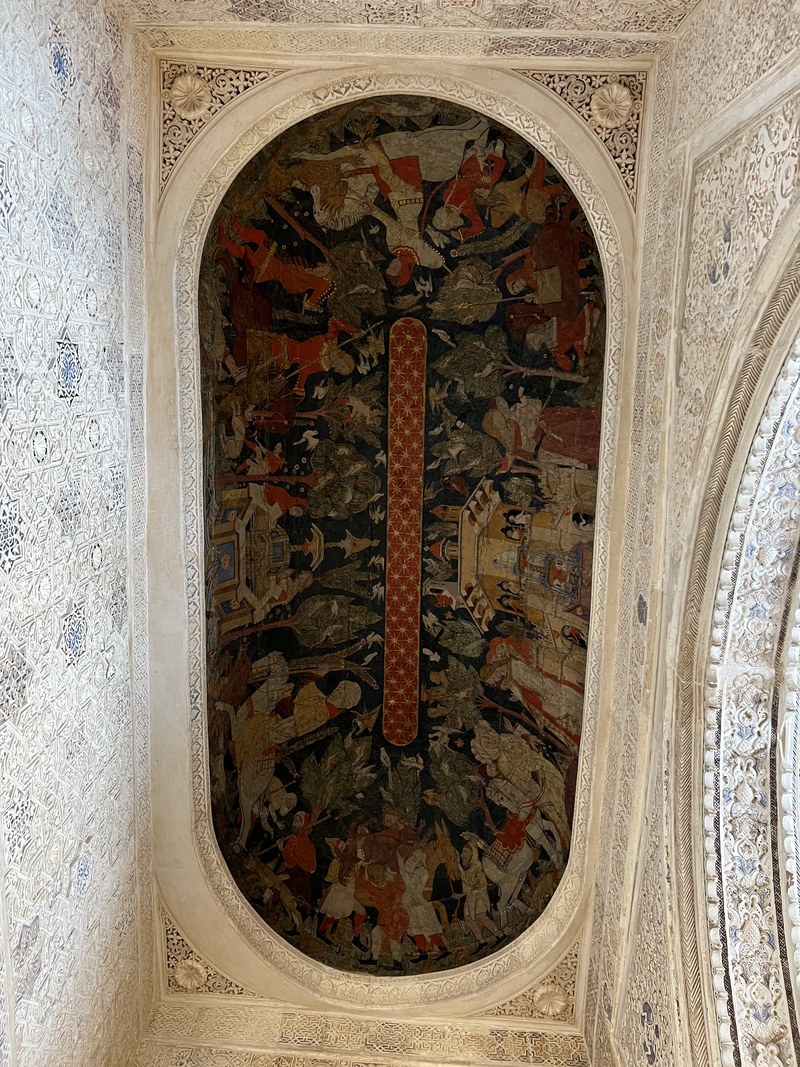
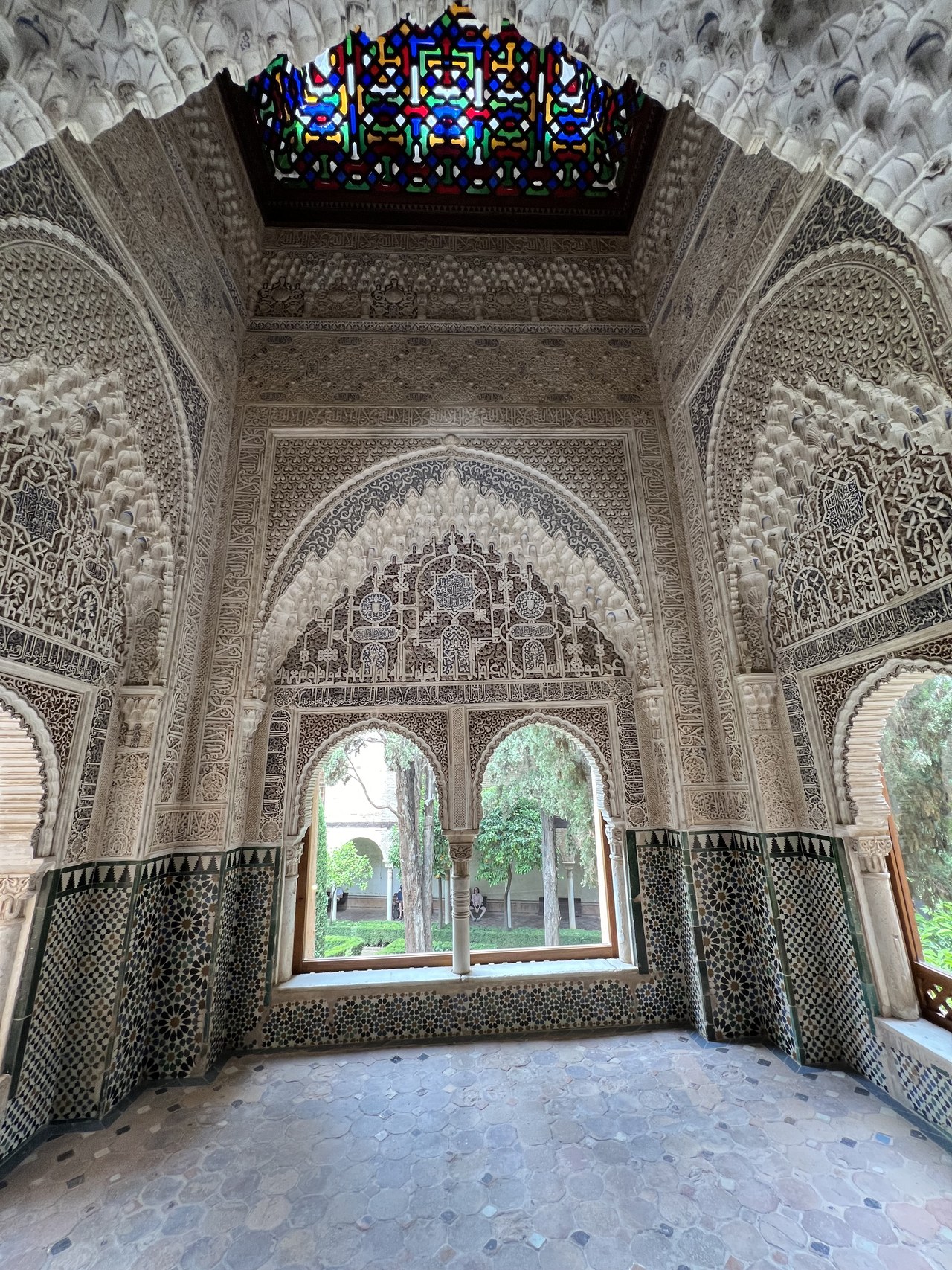
The Alhambra is made of cheap materials worked expensively. The structure is rubble, brick and timber; the surfaces are carved plaster, glazed tile and painted wood. Almost nothing load-bearing is carved stone.
⭐ This is not a shortcut. Decoration that is applied rather than structural can be as dense as you like, and it can be renewed. The muqarnas vaults — the ones that look like a honeycomb collapsing towards you — are hung from the ceiling, not holding it up.
⚠️ It also means the building has always needed maintenance, and that a great deal of what you see has been restored, some of it heavily and some of it in the 19th century to 19th-century taste. It is authentic in substance and repaired in surface.
The walls are covered in writing — Qur'anic verse, poems written for specific rooms, and the dynasty's motto, wa lā ghāliba illā Llāh, there is no victor but God. ⚠️ You will see a total number of inscriptions quoted in various places; the figures disagree and this site does not pick one.
1492
On 2 January 1492 Muhammad XII — Boabdil — surrendered the city to Ferdinand and Isabella, ending both the emirate and Muslim rule in Iberia. The terms guaranteed the religion and property of the city's Muslims.
⚠️ Those terms were not kept. Within a decade forced conversion had begun, and the Morisco population was expelled from the kingdom entirely in the following century. The Alhambra's own survival and the destruction of the society that built it are the same story, and the pleasant version told on the hill usually stops before the second half.
The monarchs kept the palaces rather than clearing them — they used them, and they are buried down in the city in the Capilla Real.
Charles V builds into it, 1527
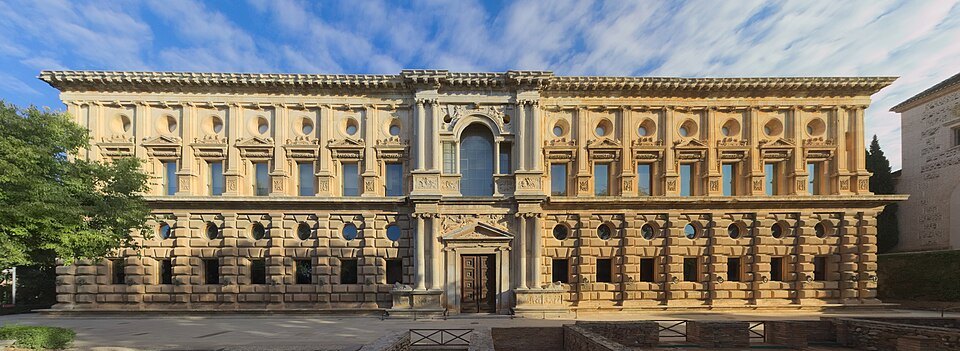
Charles V began a Renaissance palace inside the complex in 1527, which meant demolishing a section of the Nasrid palaces to make room. It is a fine building — a square block around a perfectly circular courtyard — and it is completely indifferent to what it is standing next to.
It was left unroofed for centuries and only completed in the 20th. ⭐ The result is that the two most striking pieces of architecture on the hill are arguments with each other, and you can walk from one into the other in about thirty seconds.
Decay, and the travellers who saved it
The Alhambra spent much of the 18th and early 19th centuries neglected, occupied by squatters, and damaged — Napoleonic troops garrisoned it and blew up part of the fortifications on withdrawal.
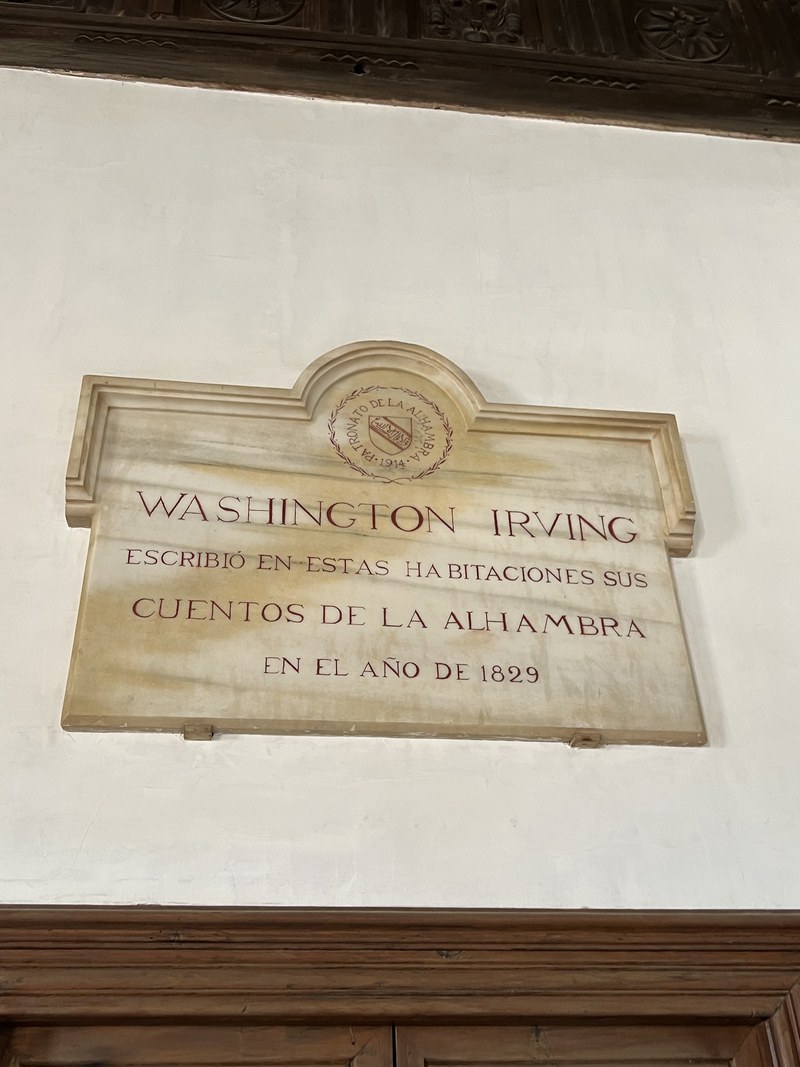
⭐ What rescued it was fashion. Romantic travellers arrived, wrote about it and drew it, and made it famous across Europe. Washington Irving lived in the palace in 1829 and wrote Tales of the Alhambra there — a plaque in the rooms he used still says so, and it is photographed on this page.
⚠️ This is also why so many old images of the Alhambra are paintings, engravings and photogravures rather than photographs, and why a picture search for it returns more art than architecture.
Restoration began in earnest in the 19th century and has not really stopped. UNESCO listed the Alhambra and the Generalife in 1984, with the Albaicín added later.
Seeing it without wasting the day
⭐ The Nasrid Palaces are entered in a timed slot and nothing else on the site is. Build your day around that one appointment and treat the rest — the Alcazaba, the Generalife, the grounds — as flexible.
⚠️ It books out well ahead in season, and the slot is the thing that sells first. The operator publishes availability; no price or time appears on this site because both change.
⭐ If you cannot get a ticket at all: the Mirador de San Nicolás, the Paseo de los Tristes and the walk up through the woods give you the building from outside, for nothing. Plenty of people have a better day doing that than queuing.