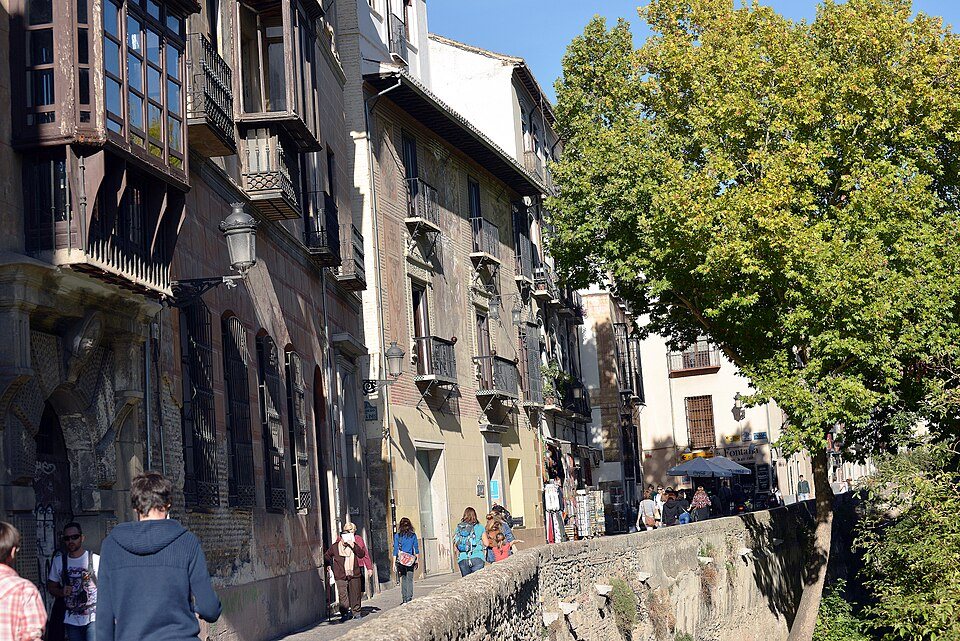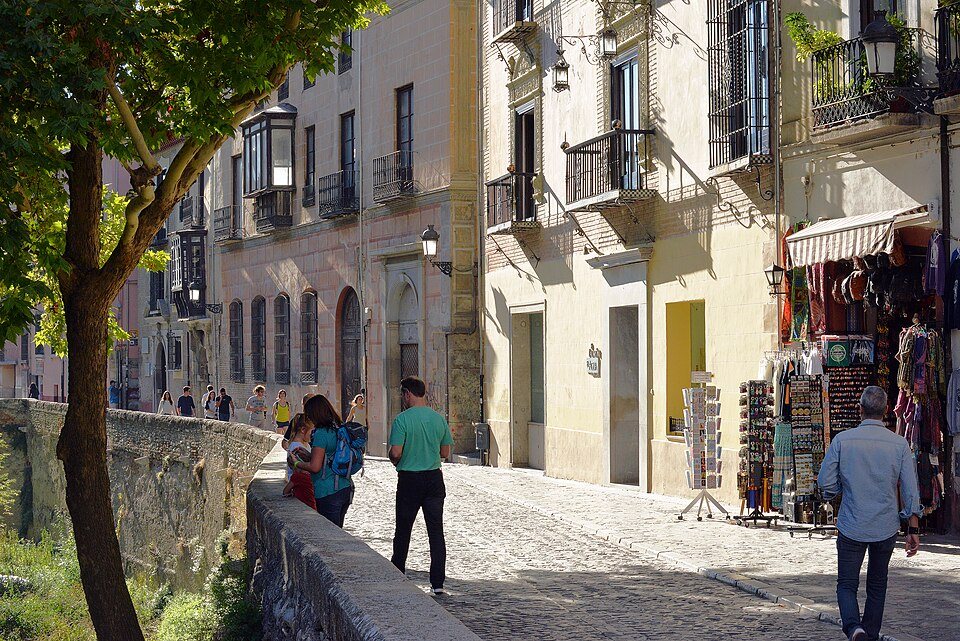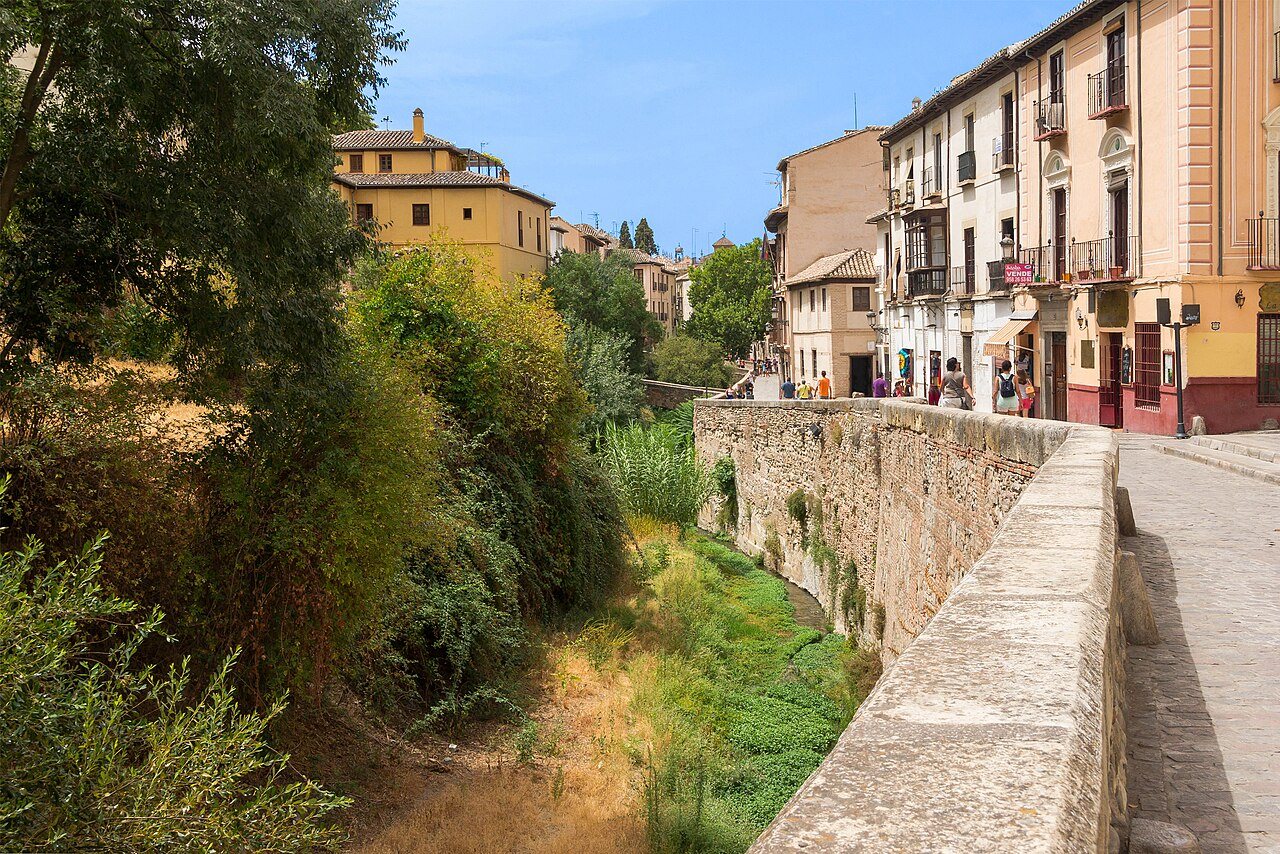
Granada has a geography of convenience, and it costs you. The streets closest to the big sights — the mouth of the Alhambra at Cuesta de Gomérez, the stretch of Calle Elvira nearest Plaza Nueva, the square in front of the cathedral — are where restaurants can fill every table without trying very hard, because the next customer is already walking toward them with a map open. That doesn't make the food bad, exactly. It makes it generic: laminated photo menus, a paella sign out front even though you're two hours from the coast, sangria served in a jug to people who didn't ask whether it comes with a free tapa or not. The fix isn't a secret restaurant. It's a habit: keep walking for five more minutes.
The five-minute rule, and why it works
Rent in Granada's old center scales sharply with foot traffic, and foot traffic scales with proximity to a monument gate or a famous viewpoint. A bar one street back from the main run doesn't need the tourist markup to survive, because its customers are neighbors who'll complain about a bad plate of something and not come back. That's the whole mechanism. It isn't about avoiding tourists on principle — plenty of excellent bars are full of them — it's about avoiding the specific subset of businesses whose entire model depends on a customer who won't be back tomorrow to object.
You can feel the line in most neighborhoods here. Around Mirador San Nicolás, the terraces with the Alhambra view in frame charge for that view, fairly enough — the sunset photo is the product. Drop down into the Albaicín's back lanes, away from the direct line to the viewpoint, and the bars serving the same cañas and the same fried fish are pricing for residents, because residents are who actually fills the room on a Tuesday in February.
Where the five minutes actually takes you
- Behind Plaza Nueva: instead of the strip facing the square, head into the grid of streets climbing toward Carrera del Darro or up into the lower Albaicín. The bars here still do the Granada thing — order a drink, get a tapa you didn't choose — but the tapa is more likely to be something the kitchen actually made that day rather than olives from a tub.
- Behind the cathedral: Bib-Rambla itself is pleasant to sit in and worth it once for the people-watching, but it's priced for the view of the square. Walk two streets toward the Alcaicería or down toward Calle Reyes Católicos and the same tortilla costs less and arrives hotter.
- South of the center, in Realejo: the old Jewish quarter around Campo del Príncipe runs almost entirely on local trade. It's a five- or ten-minute walk from the cathedral but functions like a different city — tiled bars, football on the TV, nobody handing you an English menu before you've asked for one.
- Near San Jerónimo: the streets around the monastery and the university buildings are full of bars built for students and professors, which means small plates, strong coffee, and a pace nobody's rushing you through.
- Sacromonte, with a caveat: the cave district up past Paseo de los Tristes has two economies running side by side — flamenco-dinner packages aimed squarely at tour groups, and ordinary bars a street or two higher up the hill where the same neighborhood eats on an actual Tuesday. ⚠️ If a venue is selling a flamenco show with dinner included as a single bundled ticket, that price is set by the entertainment, not the kitchen; walk uphill a little for food on its own terms.
How to order once you're there
Granada is one of the last Spanish cities where a drink still reliably comes with a free tapa, chosen by the bar, not you. This is the single biggest variable in what a night out costs, and it has nothing to do with the menu prices — it's about which bars still do it at all, since the custom thins out exactly where tourist turnover is highest. A bar five minutes off the main line is far more likely to still run the full rotation: a slice of tortilla with the first beer, a few fried boquerones with the second, something more ambitious with the third. ⭐ If you want to actually see the custom working as designed, order a round of drinks and nothing else, and see what turns up — that's the honest test of whether a place is built for its neighbors or for you.
A few habits are worth building:
- Skip any menu that's translated into five languages with photos. It's not a moral failing, but it is a signal about who the kitchen expects to see.
- Ask what the tapa is before you've ordered three rounds you didn't plan on — some bars let you pick from a short list, which is worth knowing before you're four beers in and committed to patatas bravas again.
- Cash still moves faster in small bars, and some of the best ones barely bother with a card machine. Carry some.
- If a terrace has an uninterrupted view of a monument, assume the markup and decide if the view is worth it to you — sometimes it genuinely is, especially for a sunset over the Alhambra from the Albaicín side.
The mistake almost everyone makes
The mistake isn't eating near the sights once — you will, because you'll be hungry after three hours in the Palacios Nazaríes and you're not walking twenty minutes on principle. The mistake is eating every meal within the same two-hundred-meter radius for an entire trip, because it's easy and the map app keeps suggesting the same five places. Granada rewards a slightly longer walk more than most cities its size, partly because it's compact enough that five minutes genuinely does change the street, not just the storefronts. The city center is small enough to treat as a single walkable unit; use that to your advantage instead of defaulting to whatever's closest to your hotel or the ticket queue.
None of this requires research you don't have time for on a short trip. It requires one decision, repeated: when you're hungry and standing somewhere obviously built for people passing through, don't sit down. Walk until the street stops being about you, and order there instead. For a fuller sense of how to string a day of sights and food together without doubling back on yourself, the itineraries section has routes that already build this kind of detour in.
In pictures